Elcimaï Environnement delivers a household waste treatment and recovery facility to the Occitan intermunicipal group Trifyl
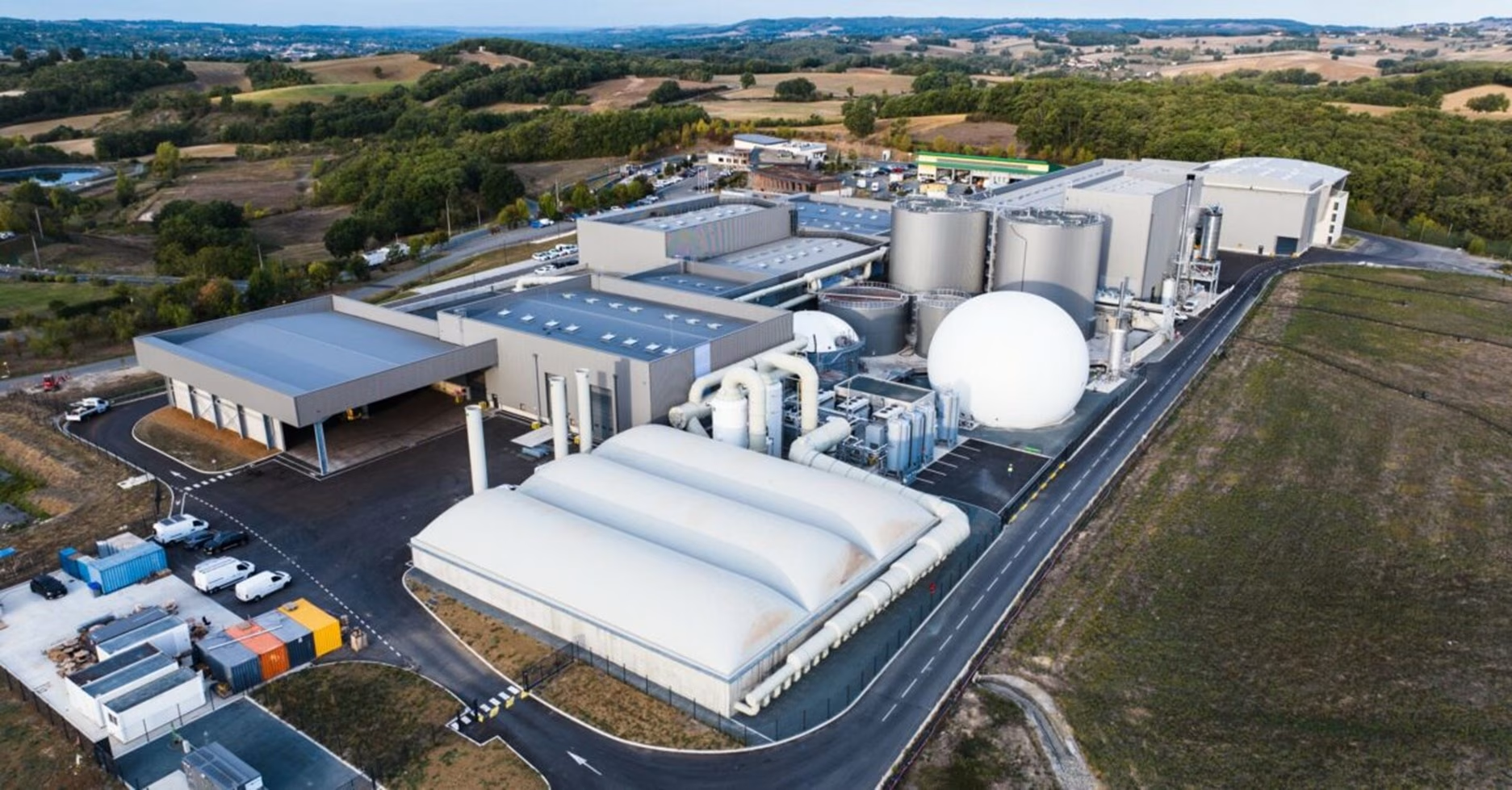
In 2014, the Occitan intermunicipal association Trifyl launched a major regional waste reduction and management project called “Trifyl Horizon 2030.” Selected to support this innovative project, the teams at Elcimaï Environnement set up a facility for treating residual household waste and biowaste in Labessière-Candeil (81). Nearly 80 % of this waste is now converted into fuel, recyclables, biogas, and compost.
The Evolution of Trifyl
Founded in 1999, Trifyl is an intermunicipal association that directly manages public waste management services. It covers an area spanning the Tarn, part of the Hérault, and part of the Haute-Garonne (Lauragais, Minervois, and Haut-Languedoc), encompassing 358 municipalities across more than 6,700 km², serving 328,000 residents.
Since its creation, Trifyl has developed an industrial infrastructure comprising some forty sites, including key facilities (two sorting centers, a bioreactor, a wood-to-energy platform, and composting platforms), supplemented by a network of local facilities (37 waste collection centers and 13 transfer stations).
In 2014, Trifyl launched a collaborative discussion with its members and partners on the future of waste management.
The challenge was threefold : to ensure, for the coming decades, an efficient, sustainable, and cost-effective public waste recovery service for its members. From this shared political commitment emerged the comprehensive regional waste reduction and management project, Trifyl Horizon 2030.
And to support this innovative project, Trifyl chose to rely on the expertise of Elcimaï Environnement.
CONSTRUCTION OF A RESIDUAL HOUSEHOLD WASTE TREATMENT AND RECYCLING FACILITY
Involved from the project’s inception, the teams at Elcimaï Environnement developed the various technical, legal, and contractual solutions that Trifyl could implement to recover residual waste from its service area. They then organized the candidate selection process, analyzed a wide range of proposals to select the most suitable one, and supervised the design, construction, and commissioning of the facilities.
Very early on, a bold and visionary decision was made : to end the landfilling of residual household waste (RHW), an initiative that now proves to be wise given the challenges that RHW recovery facilities will face starting in 2027.
To meet this challenge, the competitive dialogue with bidders led to the integration of an innovative solution for such a facility : a boiler house designed to reduce dependence on external sources of recovered solid fuels (RSF) while improving the facility’s overall performance.
This model, presented as part of the Trifyl Horizon 2030 project at COP28 in Dubai in 2023, is now considered one of the most promising avenues for ensuring the long-term viability of the French concept of energy and organic waste recovery units (some forty units across the country).
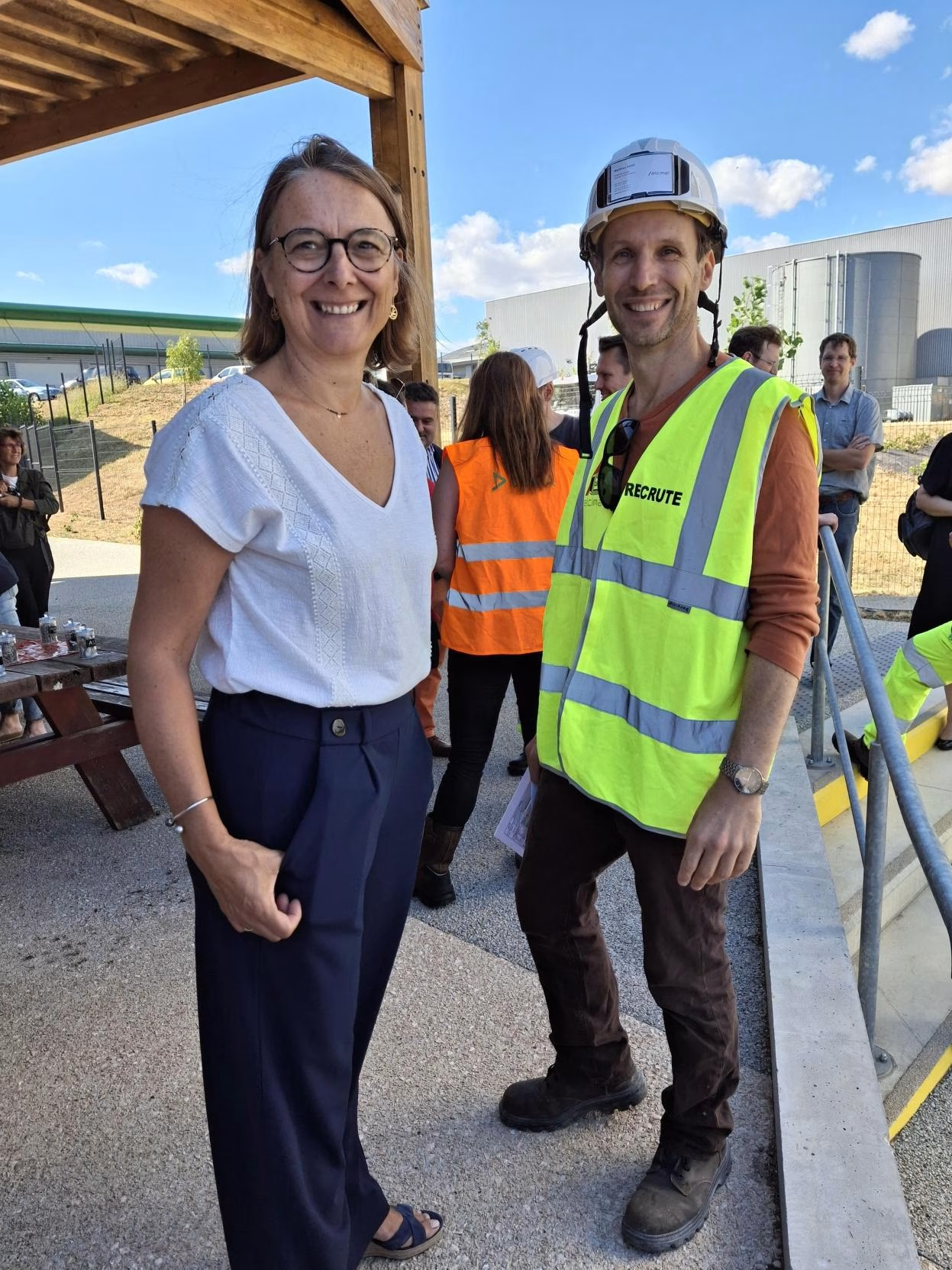
“After a decade-long project management support mission, we delivered a residual household waste treatment facility in Labessière-Candeil (81), where nearly 80 % of the waste is now converted into fuel, recyclables, biogas, and compost,” explains Mathieu Sage, project manager at Elcimaï Environnement. “The facility can process 110,000 tons of waste per year.”
The site, covering an area of 28,000 m² with a footprint of 14,000 m², comprises the following main modules :
- sorting of municipal solid waste and anaerobic digestion of its fermentable fraction,
- the preparation and combustion of RDF derived from municipal solid waste and pretreated bulky waste, with on-site heat recovery,
- unpacking, sanitization, anaerobic digestion, and composting of biowaste,
- biogas purification and injection of biomethane into the transmission network (750 Nm³/h).
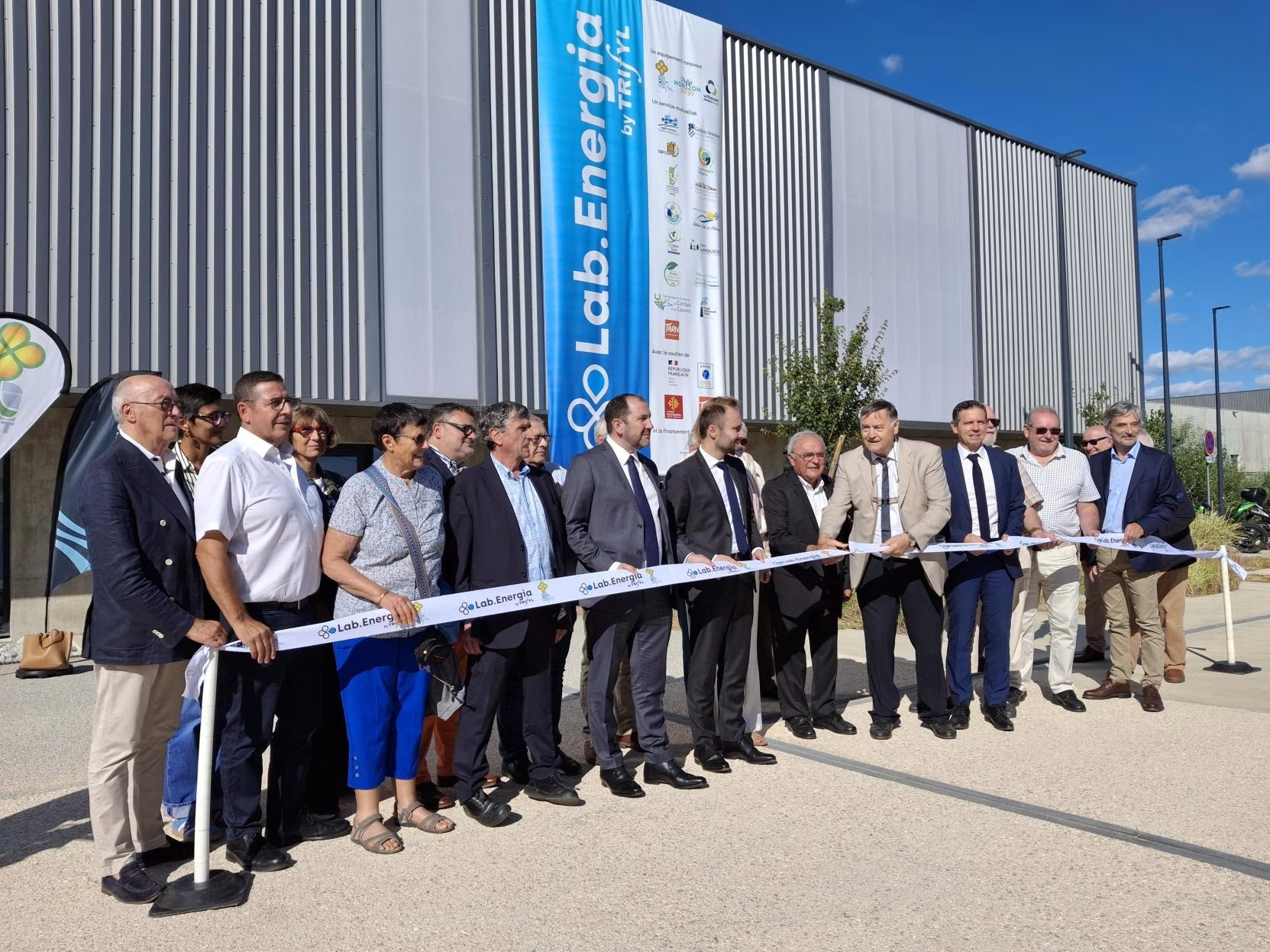
Officially inaugurated on July 8, 2025, the facility represents an investment of nearly 100 million euros (excluding taxes).