In Mios (33), the regional Equibio biogas plant has just been commissioned by elcimaï environnement
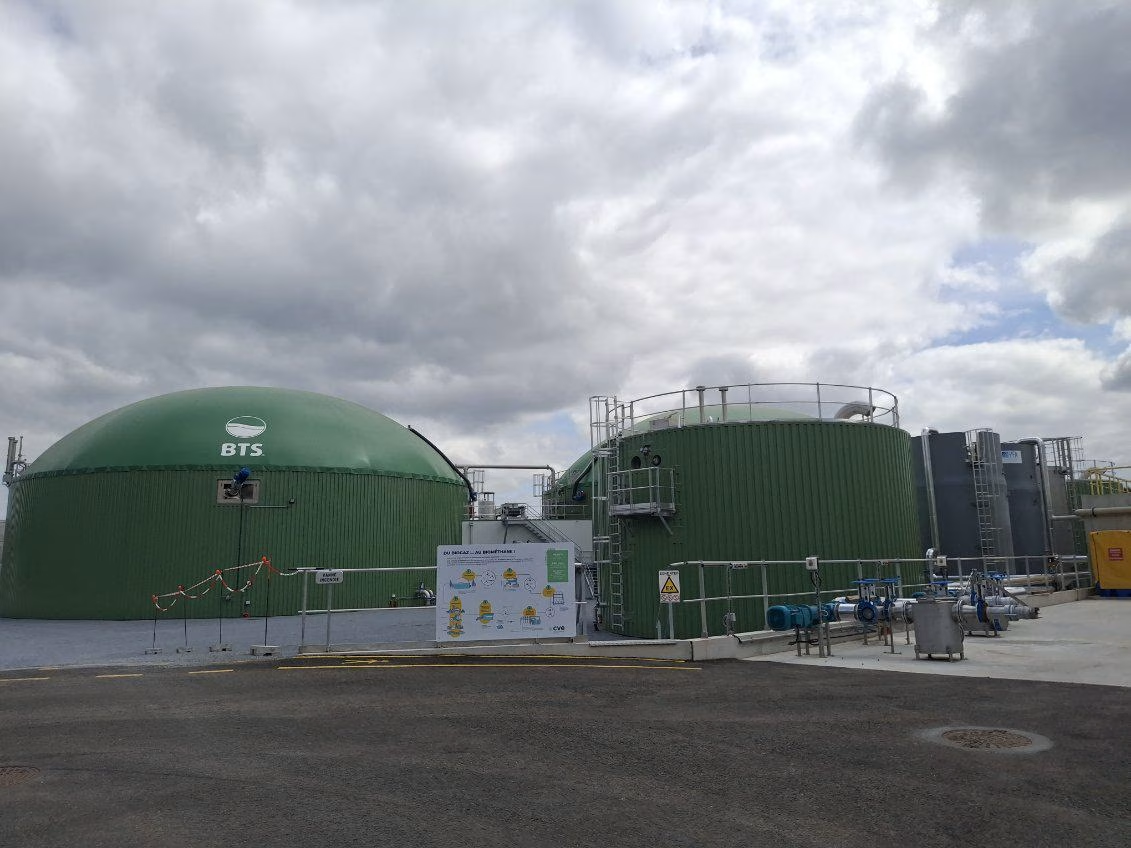
After 18 months of construction, the Equibio Pays de Buch anaerobic digestion plant, built by Elcimaï Environnement in Mios (33), will process up to 19,000 tons of organic waste per year, some of which comes from food waste generated by residents of the Arcachon Bay area. It will produce the equivalent of the green gas consumption of 2,500 households.
IT ALL BEGAN IN 2013…
Launched in 2013 to process a source of horse manure in the Arcachon basin, the Equibio Pays de Buch anaerobic digestion plant project was taken over in 2018 by CVE, an independent renewable energy producer, to provide the region with a local solution for bio-waste recovery that local officials had been awaiting.
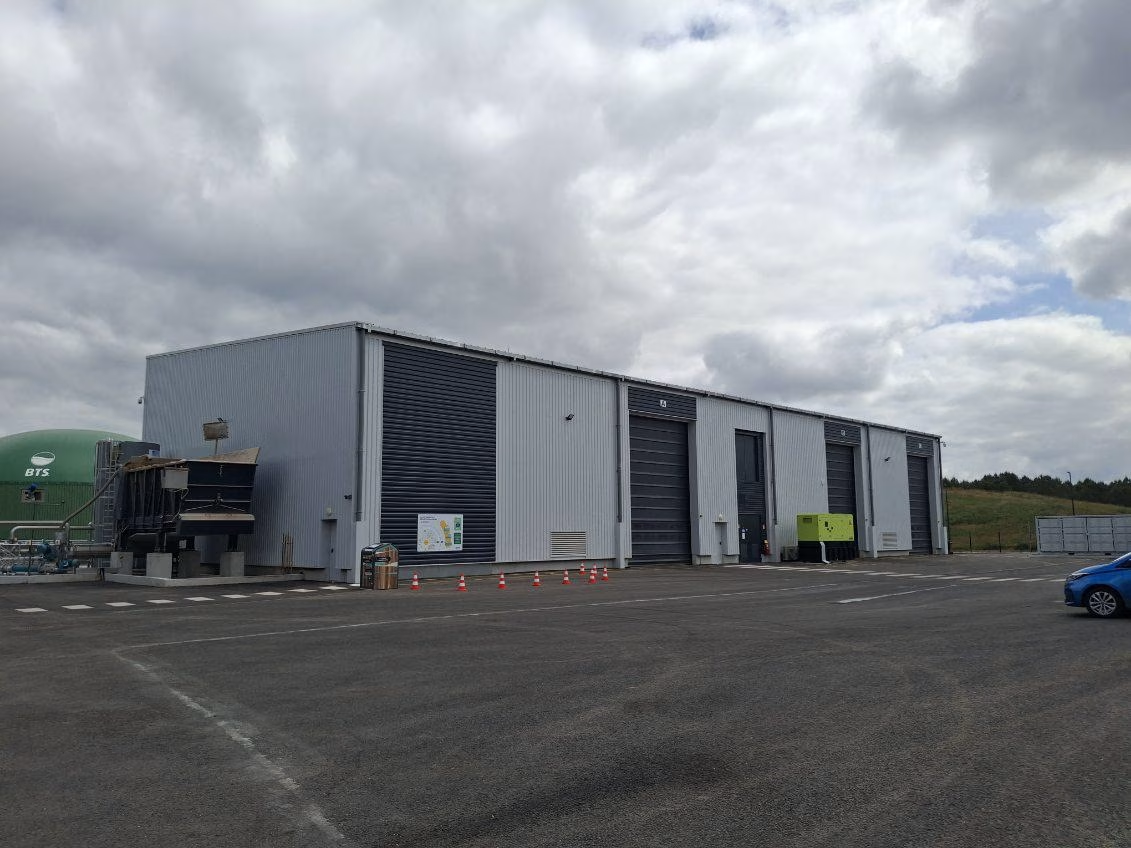
CVE and its partner Terra Énergies—an investment fund supporting the development of renewable energy in Nouvelle-Aquitaine—entrusted Elcimaï Environnement with the construction of the facility under a comprehensive project management contract, encompassing 13 technical packages, including the building permit and the ICPE declaration. Elcimaï Environnement dedicated a team of about ten people from five of its offices to this project, whose design and construction took five years. The anaerobic digestion unit has now reached full production capacity.
DISCOVER THE PROJECT
Located on land owned by COBAN (Communauté d’Agglomération du Bassin d’Arcachon Nord), it will be fed by waste collected within an average radius of 30 kilometers, amounting to up to 19,000 tons per year, nearly half of which (40 %) will consist of unpackaged biowaste from restaurants and supermarkets. Other collected materials will include horse manure and agricultural plant matter (35 %), as well as waste from the food processing industry (25 %). Processing all of this organic waste will enable the injection of 220 Nm³ of CH₄/h into the GRDF network (23 GWh/year), equivalent to the total consumption of 2,500 households.
“One of the project’s unique features is its complete deconditioning line, fully integrated on-site,” notes Romain Martin, head of the Valo-Bio division at Elcimaï Environnement. “Highly efficient, it will reduce transport distances and allow for better quality control of the bio-waste sludge produced, as well as the organic fertilizer that will be supplied to the agricultural sector. ”
Indeed, the production of locally sourced renewable gas and digestate will benefit nearby partner farmers.
Special attention has been given to water management through a specific plan that collects all rainwater from the area for use in the process and cleaning. A deodorization system has also been planned
.“For this project, Elcimaï Environnement insisted on commissioning a risk study at the interfaces between processing batches (HAZOP study : hazardous operations) with the aim of identifying all operational risks that could arise between two batches (pollution, safety, system operation, etc.),” explains Romain Martin. The risk analysis was entrusted to an external service provider in the presence of all stakeholders, with the identified risks addressed one by one. This is an unusual approach that Elcimaï intends to implement in all its projects.
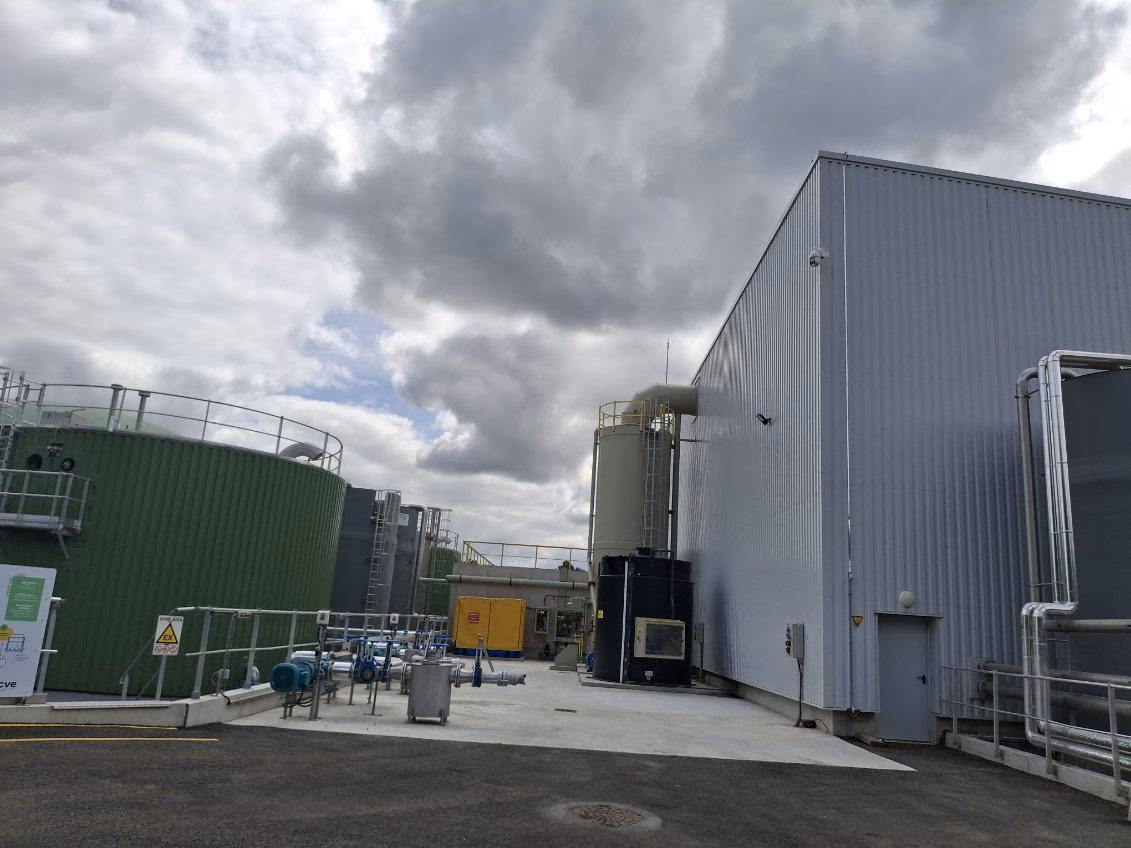
The Equibio Pays de Buch anaerobic digestion plant represents an investment of nearly 20 million euros, of which approximately 15 million euros were spent on construction.
Presentation video produced by CVE