Elcimaï Environnement presented its feasibility study on the hydrogen sector in Gap

Environmental Context
France intends to accelerate its ecological transition through the development of carbon-free hydrogen technologies. Produced via a low-carbon process, this low-carbon hydrogen is generated by electrolysis of water using carbon-free or renewable electricity.
In adopting this strategy, the government has identified three priorities :
- decarbonizing industry by establishing a French electrolysis sector,
- developing heavy-duty mobility powered by carbon-free hydrogen,
- supporting research, innovation, and skills development to foster the applications of tomorrow.
Elcimai is developing a hydrogen sector
Because it is fully committed to the ecological transition, the city of Gap (05) is studying the feasibility of developing a hydrogen sector within its territory. In this context, it has commissioned Elcimaï Environnement, an engineering consulting firm specializing in the circular economy and the ecological transition, to conduct a feasibility study.
The project focused on the following challenges :
- identifying local hydrogen consumers (transportation, industry, etc.),
- securing the hydrogen supply from renewable and local sources,
- sizing the equipment (production, storage, distribution),
- securing project financing.
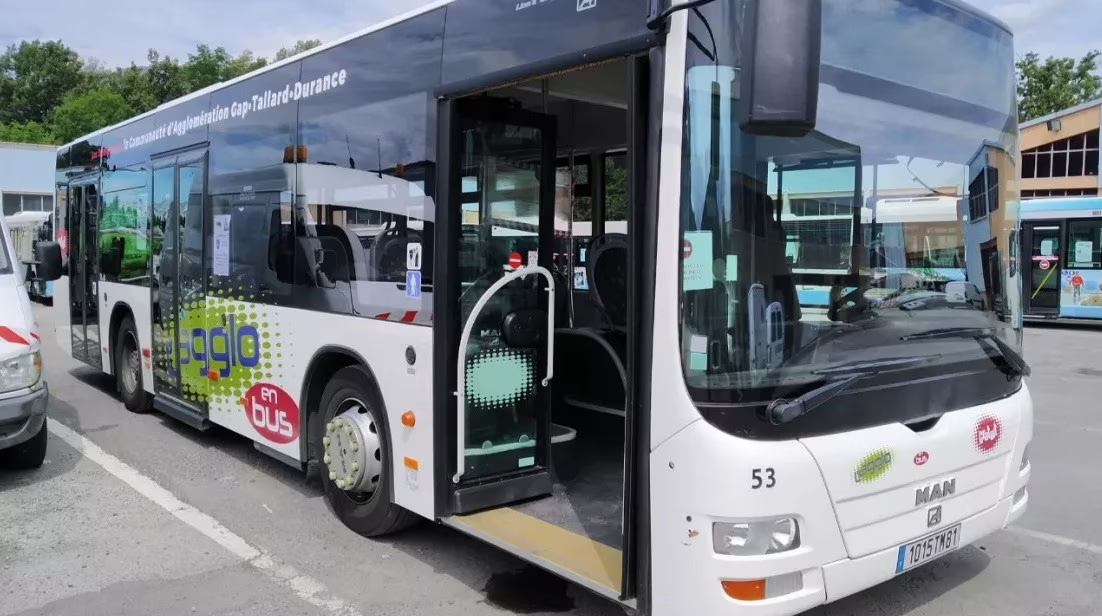
The deployment scenario presented by the Elcimaï teams would enable the conversion of approximately 40 heavy-duty vehicles to renewable hydrogen by 2030 (passenger and freight transport). Eight bus routes are specifically targeted. Furthermore, in the long term, the project could supply hydrogen to a specific local industrial partner, to a rail refueling station for non-electrified lines, as well as to snow groomers at local ski resorts. The investment required to build this facility has been estimated at 10 million euros, for a production and distribution capacity of 800 kilograms per day.
“To best explain the implications of such a sector for Gap and its metropolitan area, we brought together all potential consumers and partners on two occasions,” explains Nicolas Baduel, a research fellow at Elcimaï Environnement.
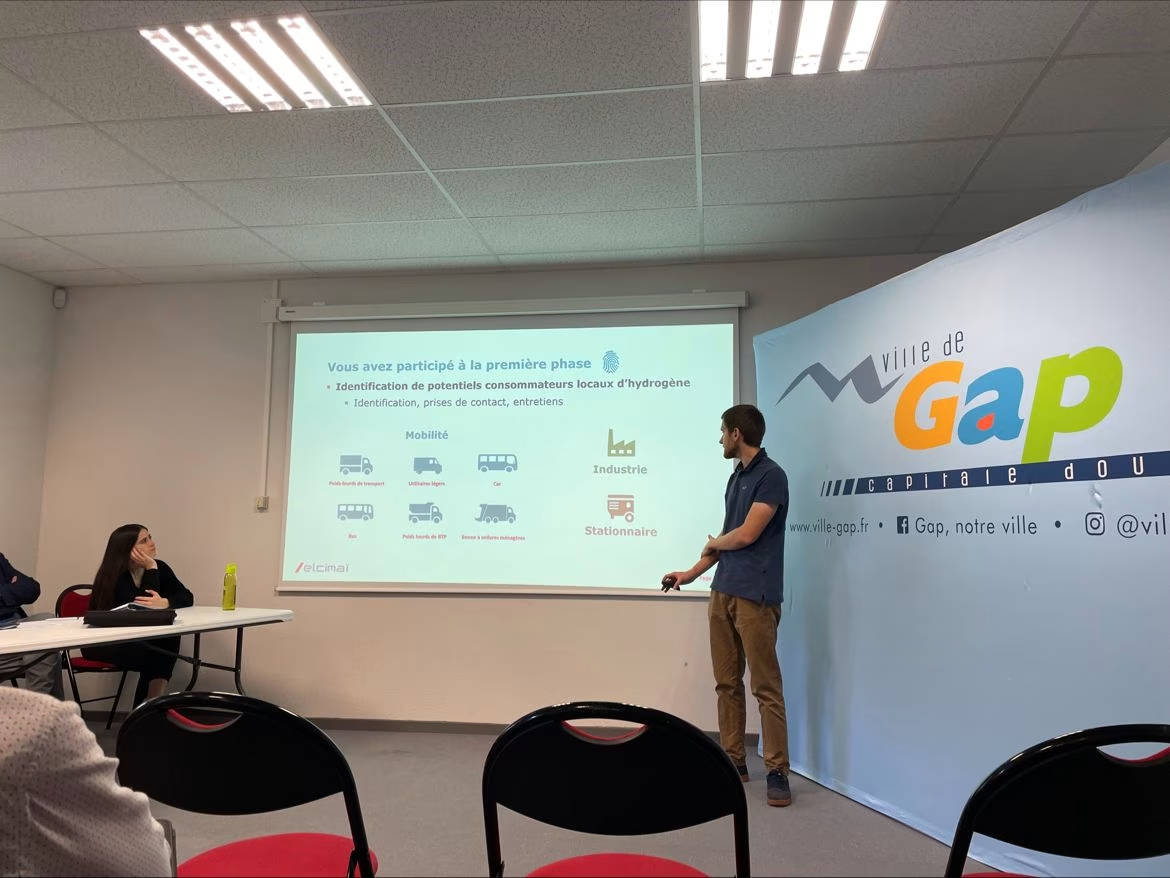
“The city of Gap, the metropolis of the Southern Alps, welcomes the results of this feasibility study in the field of hydrogen, an energy source of the future,” comments Jean-Pierre Martin, deputy mayor of Gap and vice-president of the Gap-Tallard-Durance urban community.
This study, which outlines implementation pathways in the Gap region by 2030, complements other studies and projects in the community’s energy sector (anaerobic digestion, solar energy, CNG-powered street lighting, etc.). All these initiatives make Gap a pilot city and a laboratory for the energy transition.”
The city of Gap plans to accelerate the deployment of hydrogen in the coming years
In a second phase, and based on the study submitted by Elcimaï Environnement, the city of Gap intends to participate in ADEME’s new call for projects. This initiative is part of the National Strategy for Carbon-Free Hydrogen and the France 2030 Investment Plan. Scheduled for 2023, it aims to build on the momentum of deploying multi-stakeholder, multi-use hydrogen ecosystems.
“While everyone agrees that hydrogen is a sector of the future for targeted decarbonization, it is regrettable that its development remains slow,” adds Nicolas Baduel. “This should not discourage the stakeholders who are mobilizing for their ecological transition. Once the obstacles are removed, they will be the first to equip their regions with innovative and high-performance environmental solutions.”
References : CVE BIOGAS DIVISION, RATP, SMICTOM ALSACE CENTRALE, SPL NORMANTRI, SYCTOM AGENCE MÉTROPOLITAINE…