Environmental Study of the Ports of Normandy : The Project Comes to a Close for Elcimaï Environnement and Odyssée Développement
In the spring of 2018, the Association of Local Ports of the English Channel (APLM)—which has since become the National Association of Regional Seaports (ANPMT)—launched a project to conduct environmental assessments of 10 ports in Normandy.
The goal of this study was to improve the environmental quality of the ports in order to preserve ecosystems and seawater quality, while ensuring the long-term viability of economic activity and the blue economy. All port activities were to be taken into account : recreational boating, fishing, trade, and ship repair.
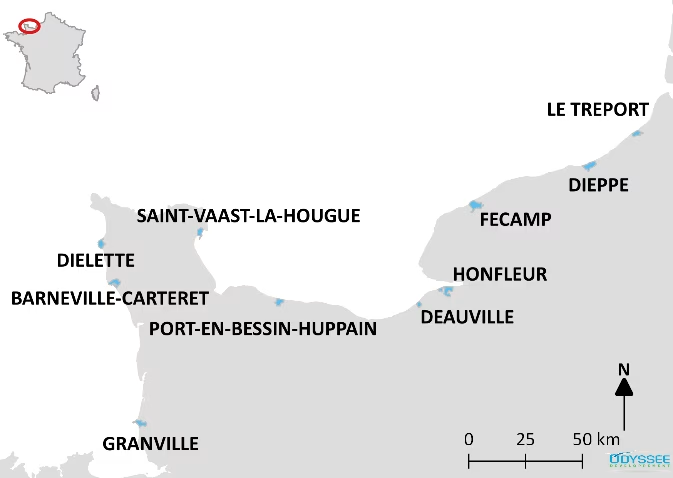
This innovative initiative, also supported by the departments of Seine-Maritime, Calvados, and La Manche, as well as the Seine-Normandy Water Agency, was to draw on the expertise of consulting firms specializing in water, waste, biodiversity, sediments, and the blue economy.
The Elcimaï Environnement consortium (then known as GIRUS GE), as lead contractor, and Odyssée Développement, specializing in the maritime economy—both subsidiaries of the Elcimaï Group—were entrusted with the project alongside three other co-contractors : Idra Environnement and its subsidiary Idra Bio Littoral, Biotope and its subsidiary Aquascop, and Nautique Conseil.
An initial phase of assessment and analysis addressed seven complementary themes across the 10 ports : socio-economics and types of activities, perception of the port, sediments, waste, water, ecological connectivity, and invasive species.
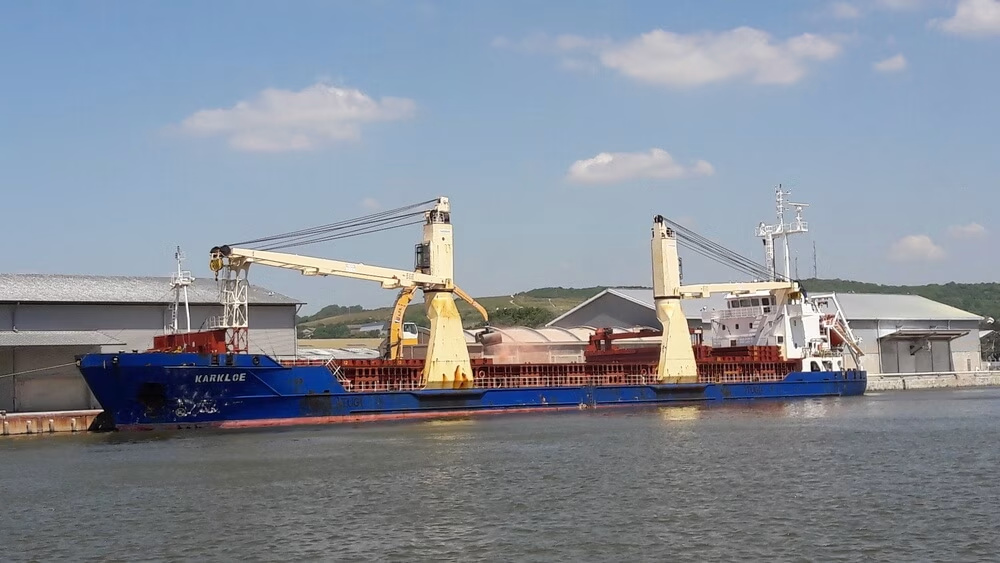
In a second phase, using a multi-criteria analysis methodology, the consortium assessed and prioritized environmental impacts, which were then discussed within a working group.
Finally, it proposed a plan of joint or individual actions, developed collaboratively with all local stakeholders. The proposed actions are structured around four key areas :
- information and knowledge enhancement (example of an objective : improving knowledge of the quantities of waste collected at the port) ;
- reducing pollution and consumption (example objective : limiting the spread of invasive alien species) ;
- pollution treatment (example objective : ensuring a sustainable hull cleaning service) ;
- mobilizing and supporting stakeholders (example objective : establishing initiatives such as an Observatory or Port Center).

“This is the first time such an initiative has been carried out jointly across ten regional ports, mobilizing multiple port authorities simultaneously, which has enabled the co-creation of an action plan, largely shared across the different ports,”
says Olivier Perrin, Circular Economy-Blue Economy consultant at Elcimaï Environnement.