Girus GE is supporting RATP in converting its buses to BioNGV
RATP has decided to convert eight of its bus depots in the Paris region to accommodate vehicles running on BioNGV (natural gas for vehicles), a locally sourced, 100 % renewable fuel that reduces greenhouse gas emissions by 80 % compared to traditional fuels. It has commissioned GIRUS GE, a subsidiary of the ELCIMAÏ specializing in the ecological transition and the circular economy, to support it in the conversion to BioNGV.
RATP is converting eight depots to accommodate NGV vehicles, starting in 2019
Gas refueling station networks are expected to see significant growth in the coming years. Natural gas for vehicles (BioNGV) is, in fact, a fuel that is locally sourced, 100 % renewable, and reduces greenhouse gas emissions by 80 % compared to traditional fuels.
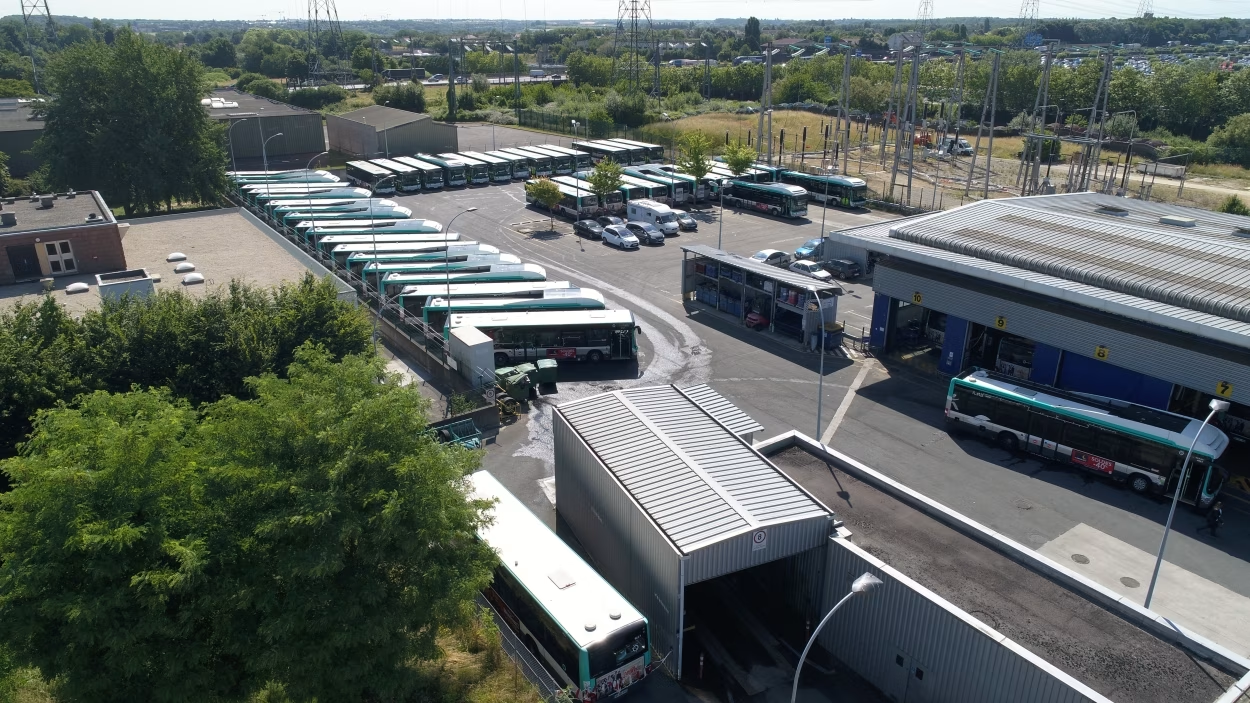
RATP has already decided to switch to biomethane by expanding the supply of BioNGV at its bus depots. The goal is to establish, as part of the Bus 2025 Program, a network of more than 1,600 gas-powered buses, representing 36 % of its current fleet. It has commissioned GIRUS GE to assist in the conversion of three of its bus depots to accommodate NGV vehicles.
After awarding GIRUS GE an initial project management contract for the Massy site in 2017, RATP has renewed its trust in the company with two new assignments : one for the Bussy-Saint-Georges center in 2018 and another for Nanterre in early 2019. For the Massy and Bussy-Saint-Georges sites, the bidding process for the various supply and construction packages is currently underway. Work is scheduled to begin in June 2019, with commissioning planned for 2020.
GIRUS GE conducted the studies for the installation of natural gas compression and CNG distribution equipment, as well as for bringing the maintenance and storage facilities into compliance with ATEX (ATmosphère EXplosive) standards to accommodate CNG buses.
Furthermore, these studies enabled the optimization of traffic flow and bus storage at RATP’s highly constrained sites, as well as the definition of bus charging methods—either slow charging or fast charging—based on the buses’ arrival and departure times at the site.