Household Waste Prevention : We Can Do Much Better !
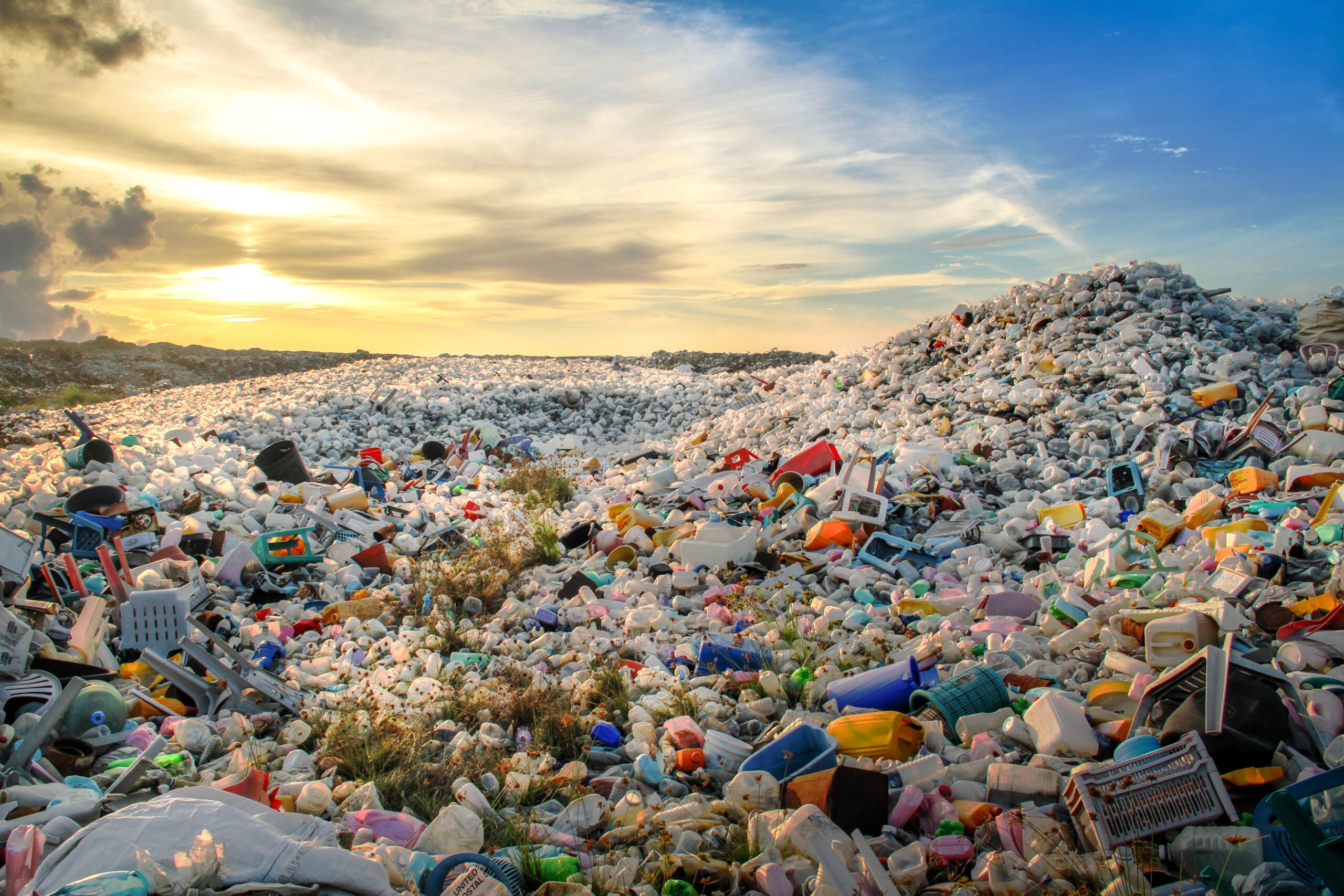
As of January 1, 2012, the development of local programs for the prevention of household and similar waste (PLPDMA) became mandatory. Waste prevention involves reducing the quantity and harmfulness of waste produced by addressing how it is generated and consumed (including reuse and recycling). The PLPDMA, for its part, consists of the implementation by local stakeholders of coordinated actions aimed at achieving the objectives defined following an assessment of the region, particularly regarding the reduction of household and similar waste (DMA). It thus enables the regionalization and specification of operational waste prevention objectives, and the definition of the actions to be implemented to achieve them.
The “AGEC” law of February 2020 aims to reduce per capita HWA by 15 % by 2030. This policy is now part of the broader framework of the transition to a circular economy and the efficient use of resources. However, engineering consulting firms working with local authorities note that, while everyone recognizes the urgency of taking action to meet regulatory targets, the resources deployed are far from sufficient. Prevention efforts remain far too rare, even though they are key to effectively tackling household waste generation.
To reduce waste by 10 %, the resources allocated to prevention would need to be increased tenfold, starting with better public education. The challenge is as much environmental as it is economic : the cost of prevention
currently stands at 1 euro per person per year, while the cost of waste management is on average 100 times higher (source : Ademe). It is imperative to encourage the public to change their consumption habits : promoting bulk purchases and “homemade” items ; making reuse and secondhand goods more widespread, as well as renting rather than buying. The ultimate goal of the PLPDMA is indeed this shift in perspective on consumption. Unfortunately, and despite the positive results achieved by those who have taken action, only 40 % of regions have formally
adopted it (source : Sinoe).
Taking all actions into account, the potential for reduction is over 100 kg per capita. We must therefore accelerate our efforts. Expanding the number of exchange points for material flows and reuse is also essential. A quarter of discarded items are reusable and represent a phenomenal source of economic activity, especially in these times of inflation ! Let’s equip the entire French territory with exchange points, so that everyone has one within a fifteen-minute bike ride from home, for example. Better yet, let’s dare to enshrine in law a ban on discarding repairable items.
The urgent need is for information and scaling up the actions being taken. While initiatives and pilot projects are still too few and far between, they are nonetheless effective and demonstrate their positive impact.
Let’s make them widespread !
Thank you to Jean-Christophe and Léa from the Elcimaï Environnement team for this op-ed published in the weekly newspaper “La Gazette”