Utilization of Sargassum seaweed : GIRUS GE has submitted its study to Guadeloupe
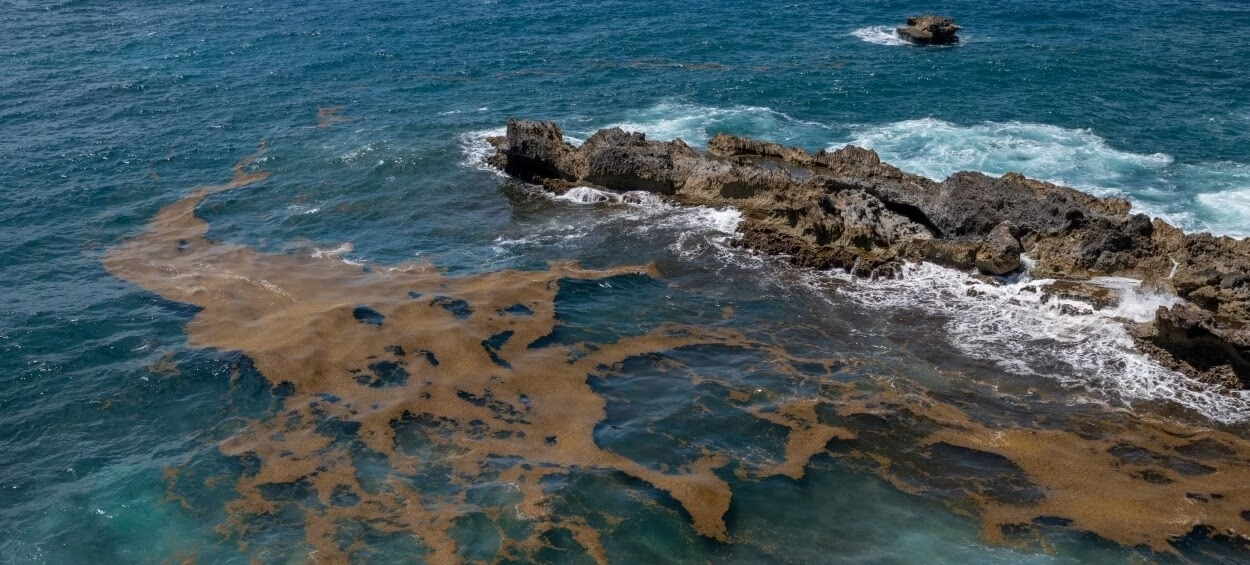
From October 23 to 26, the Guadeloupe Regional Authority is organizing an international conference on Sargassum* seaweed, which washes up on the region’s beaches and poses a threat to the economy, the environment, and public health. The Guadeloupe Regional Authority commissioned GIRUS GE to conduct a study on the subject, which has just been submitted to the authority.
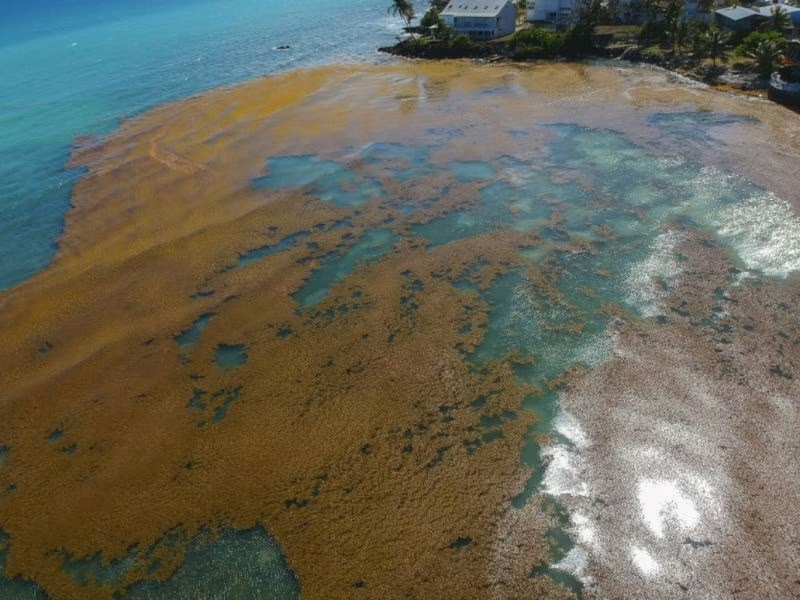
The coasts of the Caribbean, particularly those of Martinique and Guadeloupe, have been experiencing irregular strandings of Sargassum seaweed (brown macroalgae) since 2011. The cause of the proliferation of this stranded seaweed, which poses a threat to the economy, the environment, and public health, remains to be better understood. Some literature suggests hypotheses : mineral elements in coastal waters linked to the disappearance of mangroves in major estuaries, the impact of climate change on currents, or the warming of surface waters.
These Sargassum strandings are a pressing issue that is driving numerous research initiatives and the development of collection, recovery, and treatment solutions throughout the Caribbean and Mexico.
In response to this major phenomenon, the Regional Prefect has tasked the Guadeloupe Region to implement support and monitoring measures for municipalities to clean beaches within 48 hours, as well as a solution for collection at sea (to prevent stranding), which is the subject of an ongoing consultation, and finally to study technical solutions for the treatment and recovery of the harvested algae.
Currently, 90 % of the seaweed collected from beaches is stored without being utilized (in Martinique and Guadeloupe).
The challenges are therefore as follows :
- Ensuring immediate disposal options for the collected Sargassum, in compliance with current standards,
- Processing large volumes in a short time frame (as Sargassum arrives in peaks),
- Developing utilization processes that account for the unpredictable nature of the resource,
- Identify long-term recovery potential, enabling the development of a sargassum-based economy and the transition to a circular economy.
GIRUS GE, a subsidiary of the ELCIMAÏ Group specializing in the circular economy and energy transition, was commissioned to conduct this study. The study addresses a number of key issues :
- What is the regulatory and economic context applicable to seaweed prior to stranding ?
- What are the techniques for treating or utilizing this seaweed—whether proven at an industrial scale, under development, or still in the research phase ?
- What action plan should Guadeloupe adopt ?
Recently presented, the study highlighted several technical solutions and a plan tailored to needs and the maturity of the technologies.
In the short term (1 to 2 years) : spread collected algae (rather than storing them) by pumping under satisfactory control and monitoring conditions.
In the medium term (2 to 4 years) : deploy proven techniques to meet mass demand (massive inflows over 6 months) : drying, storage, composting, making available for energy recovery, baling (creation of dunes).
Finally, in the long term : develop value-added recovery methods based on drying/storage platforms : pyrolysis, bioplastics, molecular extraction…
Based on this study and the proposed guidelines, the Prefecture and the Region have decided to create a working group aimed at defining the facilities to be built (to be operational in the medium term) and implementing spreading plans starting in 2020.