The Les Houches Electricity Authority has awarded Elcimaï Environnement the contract to build the Bourgeat hydroelectric power plant
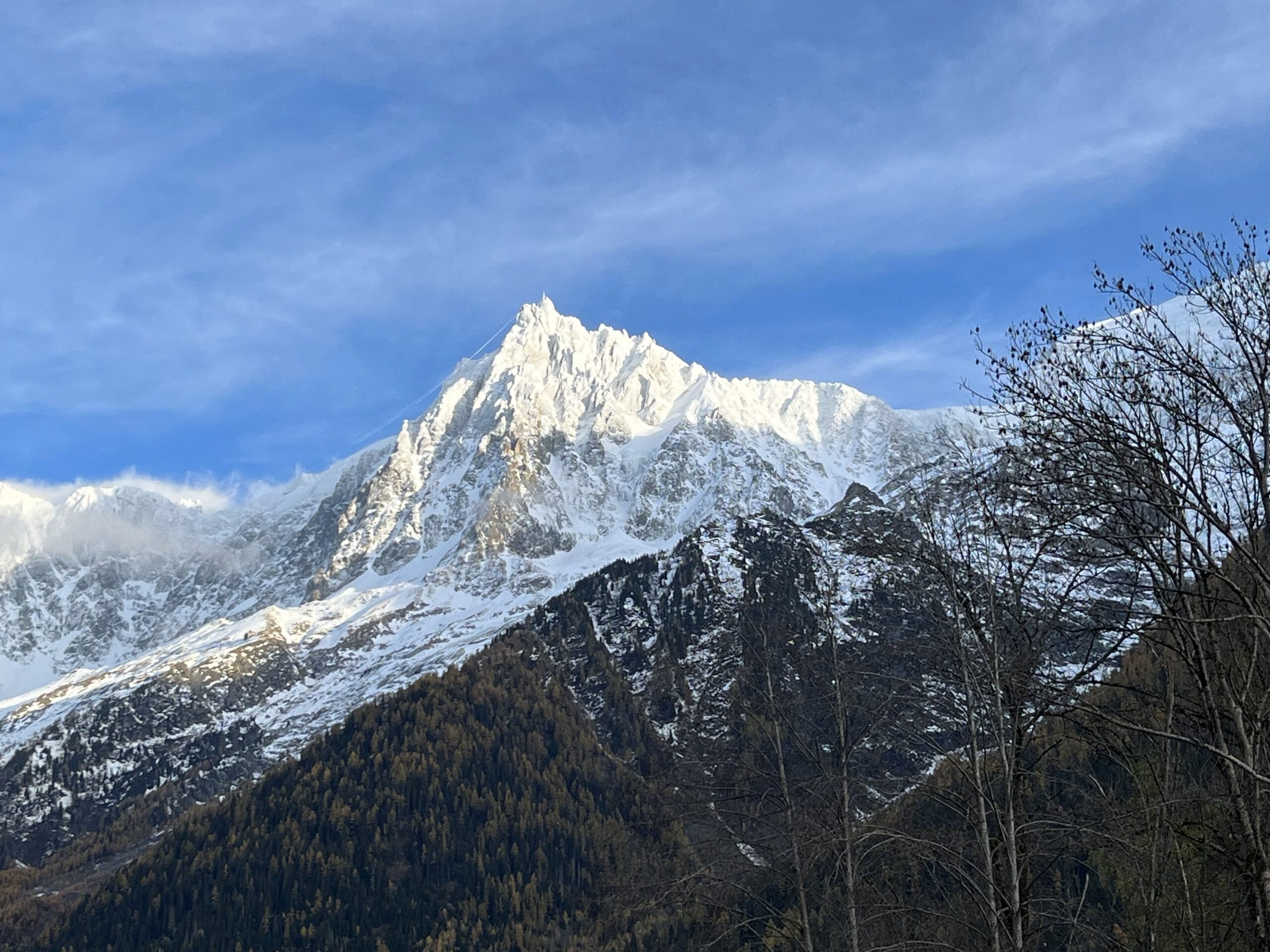
The Régie électrique des Houches, the project owner, has entrusted Elcimaï Environnement with the project management of the Torrent du Bourgeat hydroelectric power plant, located at the foot of Mont Blanc, which was inaugurated today. Following a construction project marked by significant challenges, the power plant’s facilities will supply the region with renewable energy and contribute to its energy transition.
Elcimaï serves as project manager
The Régie Électrique des Houches, a public utility responsible for distributing electricity to 4,300 customers in the Arve Valley in Haute-Savoie, is fully committed to sustainable development. In line with the objectives of the valley’s Territorial Climate and Energy Plan, the new hydroelectric plant will contribute to the region’s energy self-sufficiency by generating 3 GWh of renewable energy out of an annual consumption of 42 GWh.
Although several sites in the region have hydroelectric potential, the Régie Électrique des Houches took a particular interest in the Bourgeat torrent, in the town of Les Houches at the foot of Mont Blanc, as harnessing its waters is expected to supply the public grid (or the local public utility).
To build a hydroelectric power plant there, it commissioned Elcimaï Environnement, a leading consulting and engineering firm in the renewable energy sector, to serve as the project manager.
The project involved constructing a water intake immediately downstream of the Bourgeat waterfall and installing a pipeline approximately 2,200 meters long with a head of 380 meters. The plant was to be built along the departmental road known as Avenue des Alpages. The goal : to generate 3 GWh of energy using a 1,000 kW generator set.
As a specialist in the field of hydropower for projects ranging from micro-power plants (less than 20 kW) to small hydropower plants (10 MW), Elcimaï Environnement had in-depth knowledge of the site, the local context, and the challenges associated with the project. In fact, the company had, on the one hand, conducted the studies for the Enchapleuze plant and, on the other hand, served as the project manager for the Taconnaz plant.
“Natural hazards, urban planning regulations, and the location of certain equipment within a protected area imposed significant constraints on the design and implementation of the project,” explains Christophe Yzet of Elcimaï Environnement. “The intake site and the pipeline route are located in an area with a very high risk of avalanches, as they are largely situated within the avalanche buffer zone. Additionally, the Bourgeat torrent regularly experiences violent debris flows, which required design adjustments.”
The project is generally located in a natural area where the construction of public infrastructure is, however, permitted. The water intake is located downstream of the Mont Blanc protected area. The turbine plant, which is legally located in a red zone, is protected by an avalanche barrier. Although the pipeline route follows an ecological corridor, construction work has not altered the ecological balance of the area.
To successfully complete the project, the teams at Elcimaï Environnement relied on the expertise of Gay Environnement, which conducted the environmental impact study, and on Architecture Énergie. Elcimaï Environnement’s expertise and experience also enabled it to navigate regulatory procedures and administrative processes (particularly applications for operating permits) as well as manage the entire project under demanding conditions.
Launched in 2020, the project lasted a total of 18 months, taking into account significant winter interruptions of approximately 7 to 8 months per year.
Inaugurated today, the Torrent de Bourgeat hydroelectric power plant has generated its first gigawatt.
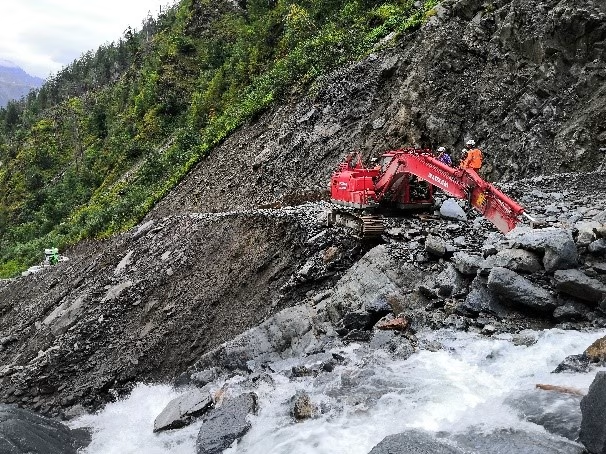
2021 : A construction site balanced
on the slope of the torrent
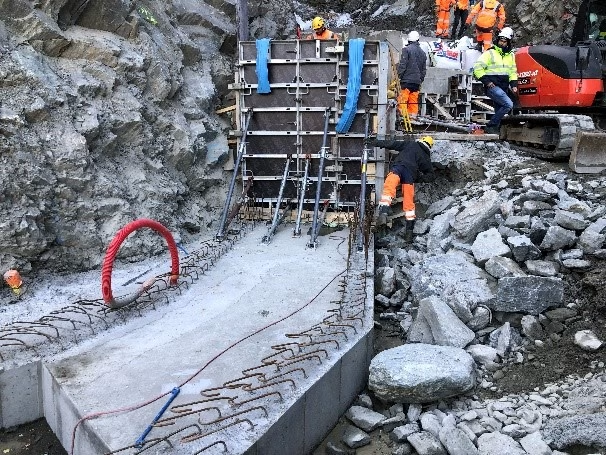
2022 : Continued work on the intake structure
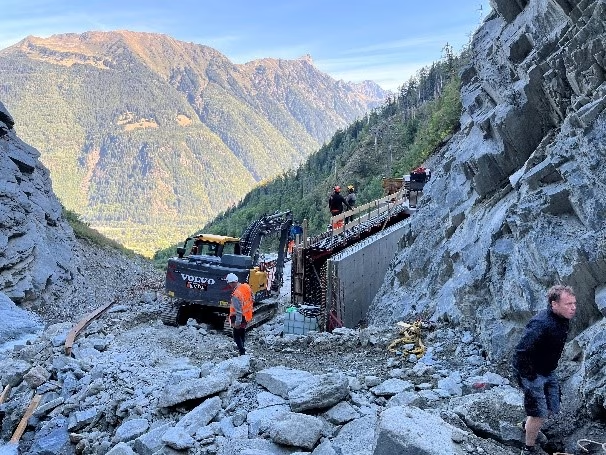
2022 : Third summer of work on the intake structure
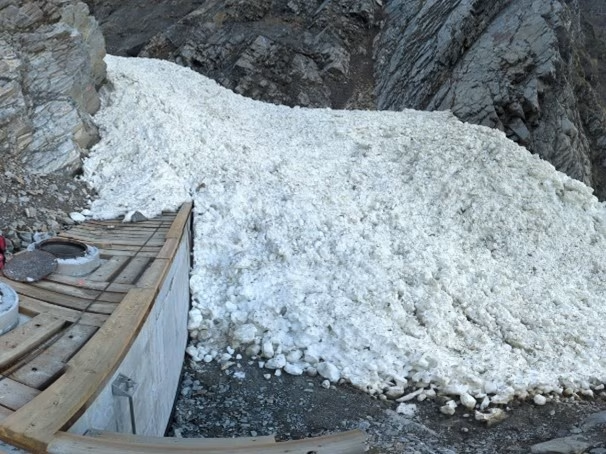
2023 : Intake structure covered in snow
Equipment selected to optimize the torrent’s potential
To maximize the stream’s potential, Elcimaï’s teams conducted several in-depth studies that led to the selection of the following equipment.
Located downstream from the Bourgeat waterfall, at an elevation of 1,390 m, the intake structure consists of an “underwater” intake, also known as a “Tyrolean intake.” Installed in the riverbed, it operates using the natural flow of the water, without creating a dam. Part of the water is captured by a screen located across the riverbed, then flows into a channel beneath the screen. The water is then conveyed to a sand trap located on the right bank of the Bourgeat, allowing suspended sediments captured by the screen to settle. An opening in the sand trap gate allows a minimum flow to be returned to the river. Finally, the captured water flows into a pressurization chamber before being transferred to the power plant via the penstock.
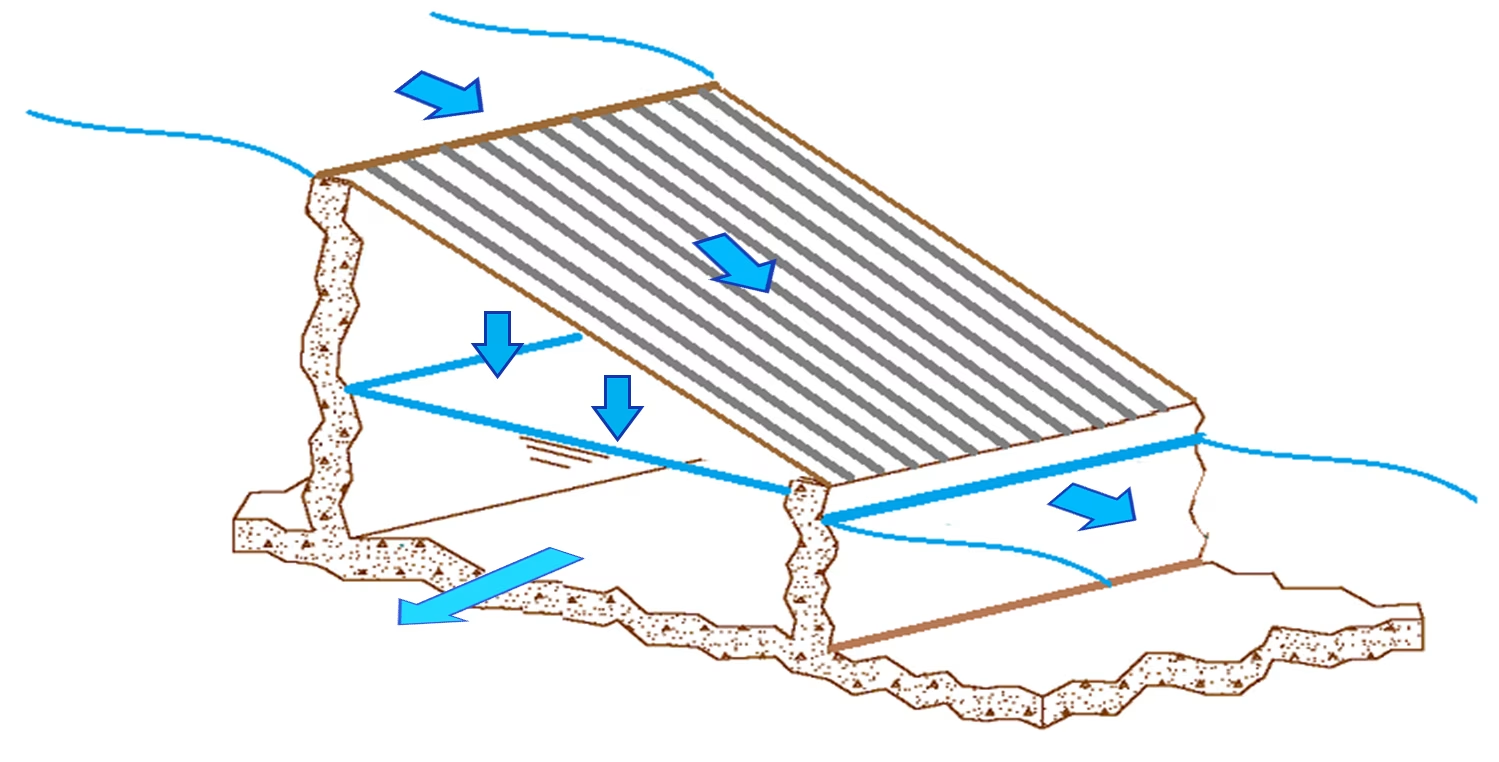
Diagram of the water intake structure
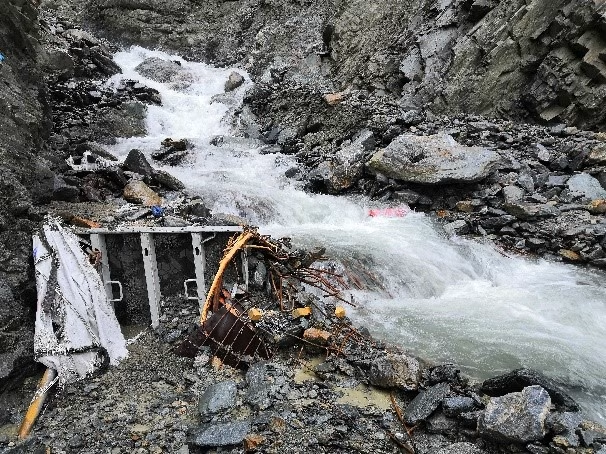
2021, first sand removal screening structure swept away by the force of the torrent
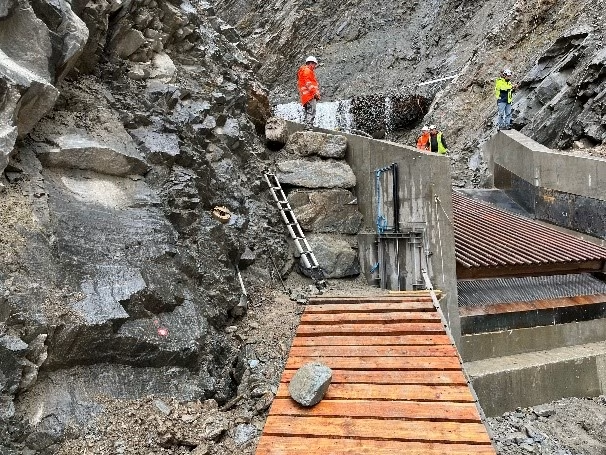
2022, completion of the intake structure
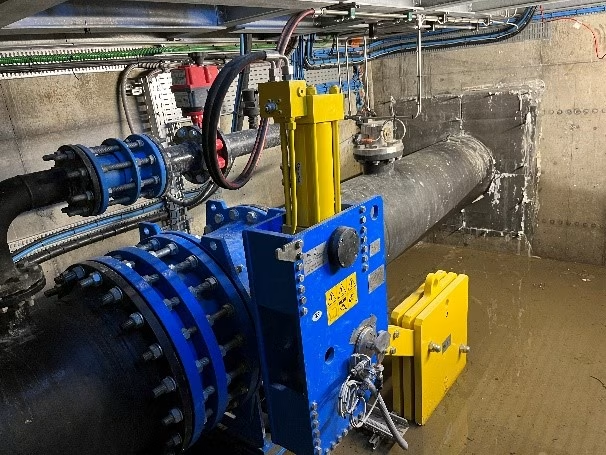
Connection of the intake structure to the penstock
The power plant building is located at an elevation of 1,000 m above sea level, on the right bank of the Bourgeat. With a floor area of approximately 100 m², it houses the turbine and all the hydromechanical and electrical equipment necessary for the proper operation of a micro-hydroelectric power plant. Multi-jet Pelton turbine, alternator, transformer, control and monitoring systems with associated alarm system, return pipe, connection to the 20 kV power line.
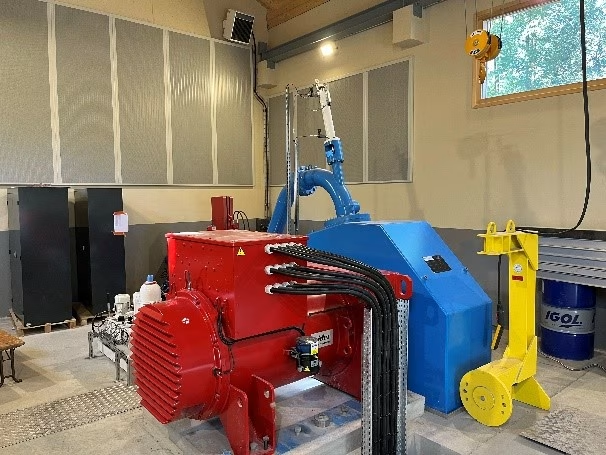
Multi-jet Pelton turbine
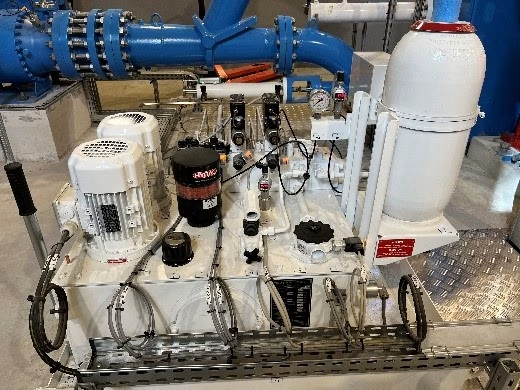
The plant’s hydraulic unit, which operates the bottom gate, the two injectors
, and the deflector
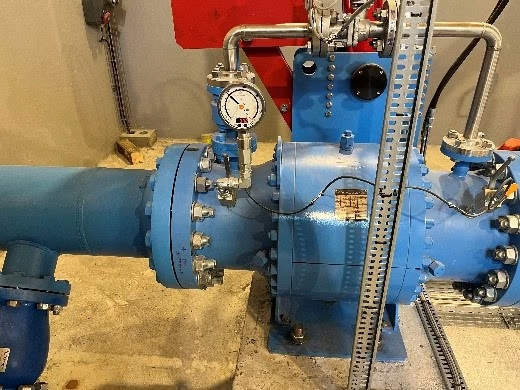
Power plant foot valve and its bypass
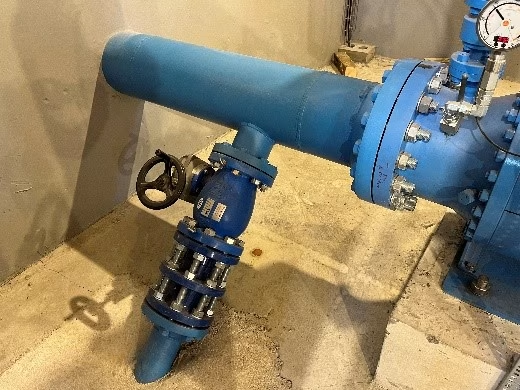
Drain valve for the penstock upstream of the plant’s foot valve
The 2,135-meter-long penstock was buried along its entire length. Its route follows existing forest roads to the power plant site. This minimized the necessary deforestation. The teams at Elcimaï Environnement opted for a cast iron pipe, better suited to the project, with a diameter of 500 mm.
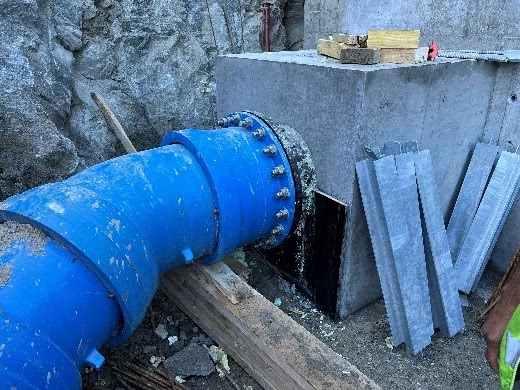
Start of the penstock at the water intake
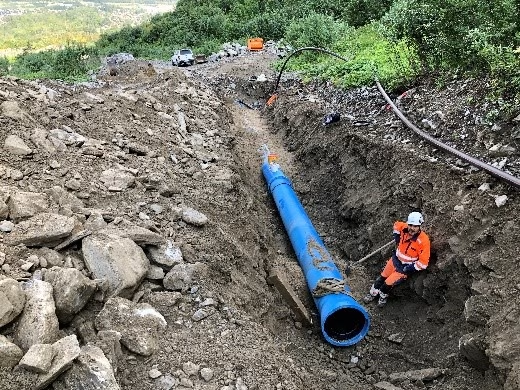
Burying the penstock along its route through the valley
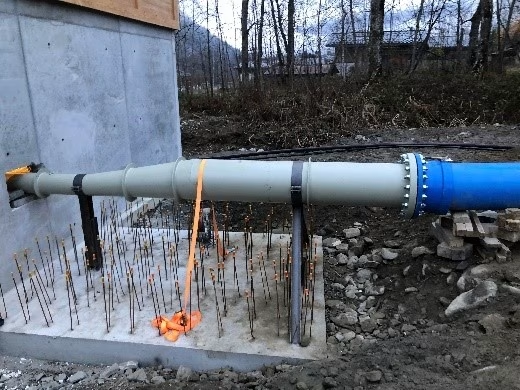
Arrival of the pipeline at the power plant
Work carried out by fourteen specialized contractors
LOT 1 – Civil engineering structures and penstock



LOT 2 – Power plant









LOT 3 – Electrical and automation systems