When the Internet of Things makes it possible to provide a renewable energy solution to the South Pole from Lyon
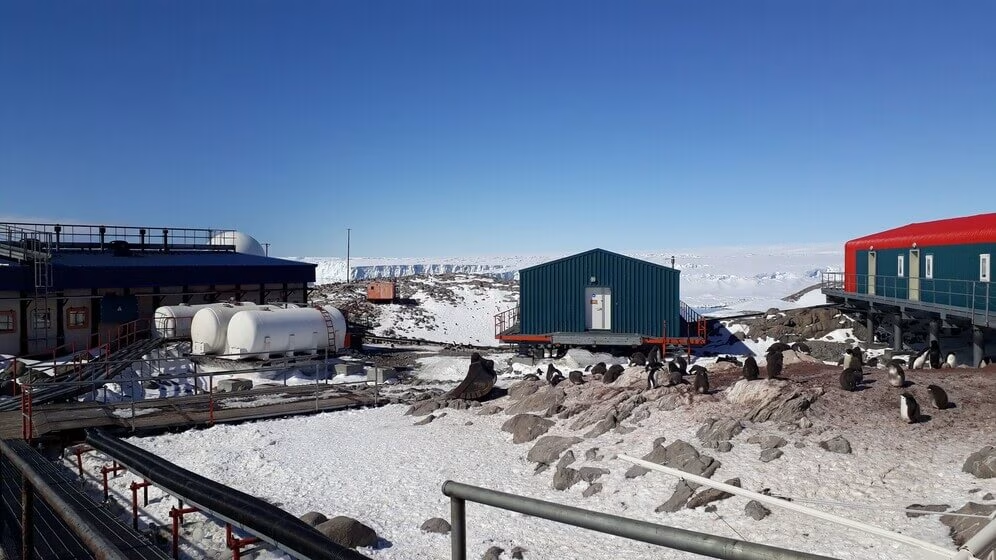
To provide a renewable energy solution for the Dumont d’Urville research station in Adélie Land, Elcimaï Environnement—which specializes in consulting and engineering services related to the circular economy and the green transition—is leveraging the Internet of Things.
Home to about forty technicians and researchers, the Dumont d’Urville research station (Antarctica) is primarily powered by diesel generators throughout the year.
Its managers commissioned Elcimaï Environnement to analyze the distribution of electricity consumption, with the goal of proposing an electricity generation solution based on renewable energy.
This project was made possible, despite the 15,000-kilometer distance, thanks to the Internet of Things (IoT).
The proposal from Elcimaï, which was selected by the base, was built on a technical solution patented by the company Gulplug, consisting of sensors, a case, and a connection to a cloud server.
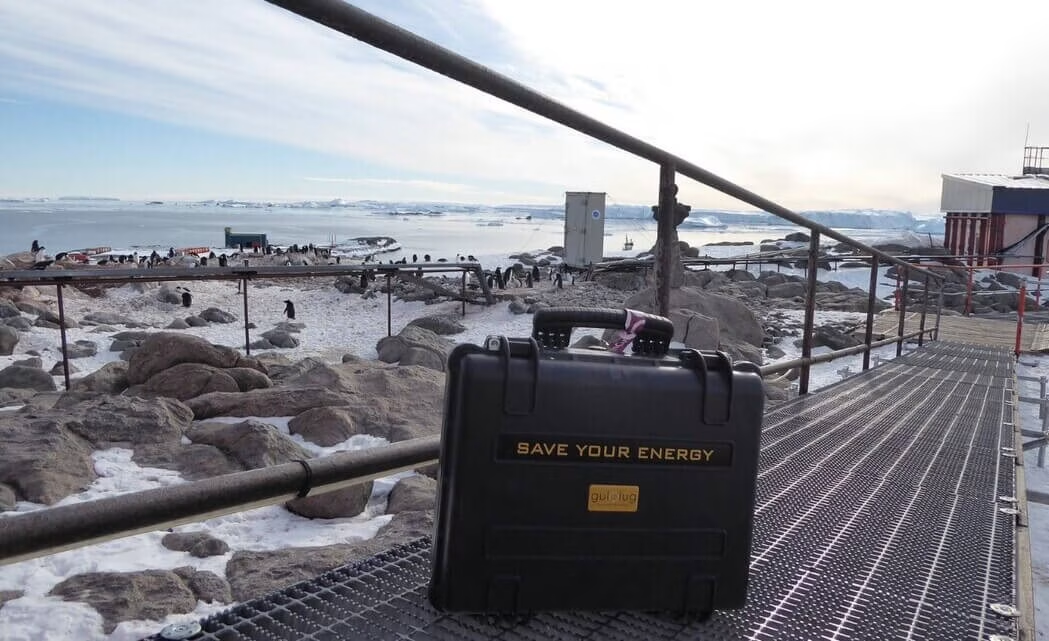
“Our staff access the information provided by the sensors on this ‘cloud’ generally twenty-four hours after it is collected,” explains Christophe Chavrier, electrical engineering manager at Elcimaï Environnement. “In this particular case, the data from the day is compiled before being sent all at once.” “Usually, a mobile phone SIM card paired with a radio module is sufficient for this type of transfer.”
Sensors and a data logger were installed in Terre-Adélie a few months ago by technicians from the base. “This solution,” adds Christophe Chavrier, “was easy to configure from our offices in Lyon. The selected data allows us to identify energy-consuming equipment and areas. At this stage, our data collection and analysis mission is complete. We have made proposals for transformation, particularly regarding the type and location of renewable energy solutions. These will likely be wind turbines that will partially replace the generators, and why not a fuel cell by 2050.”
Undoubtedly more environmentally friendly, the proposed solution should also be more cost-effective.